Whether it's EU regulations on cucumbers or the extremely discerning customers in retail stores, only fruits and vegetables with virtually no defects or visual flaws typically make it onto the shelves of German supermarkets – after all, presentation matters. However, the reality on farmers' fields is quite different: every year, tons of the best fruits and vegetables are left to rot or end up as animal feed. This means that farmers can't sell up to 40% of their harvest at all. Why is this? It's mainly due to EU regulations for the trade classes into which agricultural products are categorized. These regulations focus exclusively on visual characteristics; taste and fruit quality are not taken into account.
fruit and vegetables
As an EU quality standard for fruit and vegetables, the legislator has established the following quality classes as binding in order to improve market transparency and to protect consumers from inferior goods:
Common characteristics of all classes: whole, firm, healthy, clean, pesticide residues are limited to a safe level, free from foreign odor and taste, free from pests, free from damage caused by pests, free from excessive moisture, sufficiently developed (ripe).
The packaging must be sturdy to protect the products.
Class criteria:
- Trade grade Extra (H. Extra) highest quality; free from any defects (whole, smooth, firm, plump), well-shaped, uniform color, same size.
- Trade grade I (H. I) good quality; slight defects in shape and development, slight color defects, very slight bruising, sufficient strength.
- Trade Class II (H. II) medium quality; more significant defects and color variations are permitted. In any case, the minimum requirements must be met. Almost all organic products carry the H. II designation.
Source: Wikipedia
Although the Class II classification already attempts to address the retail industry's obsession with aesthetics, at Antidote we feel this isn't enough. Since visual appearance is truly irrelevant in cold-press juicing , we deliberately purchase the rejected produce that retailers deem unsellable when sourcing our 100% organically grown ingredients. This offers numerous advantages for you, the consumers, and for us as manufacturers:
- We hardly interfere with retailers when purchasing our ingredients, and therefore we know exactly where our organic ingredients for our cold-pressed juices come from.
- Since nobody else wants this product initially, we can achieve slightly lower prices when purchasing it, which we pass on entirely to the price of our juice. This means that Antidote Juice is just as delicious for you – but a bit cheaper than our competitors' – great, right?
- The farmers and traders are happy to now have a buyer for this product, no longer have to worry about it and earn more from their harvest.
- A new market is emerging (we are talking about B-grade goods or trade class III), which should result in a long-term decrease in the prices for organic fruit and vegetables in retail.
- As a customer, you know that you are contributing to a regional, decentralized economy – feels good, doesn't it?
By the way: Slowly but surely, things are happening – and we're not the only ones with this approach! Three Berlin students , Giacomo Blume, Moritz Glück, and Daniel Plath, published their diploma thesis, ' Ugly Fruits, ' a concept for the widespread distribution of ugly vegetables , and have already won the 2013 ADC Junior Award from the Bauhaus University Weimar in the Holistic Communication category. They are now planning to open their first store, starting in our capital city of Berlin.
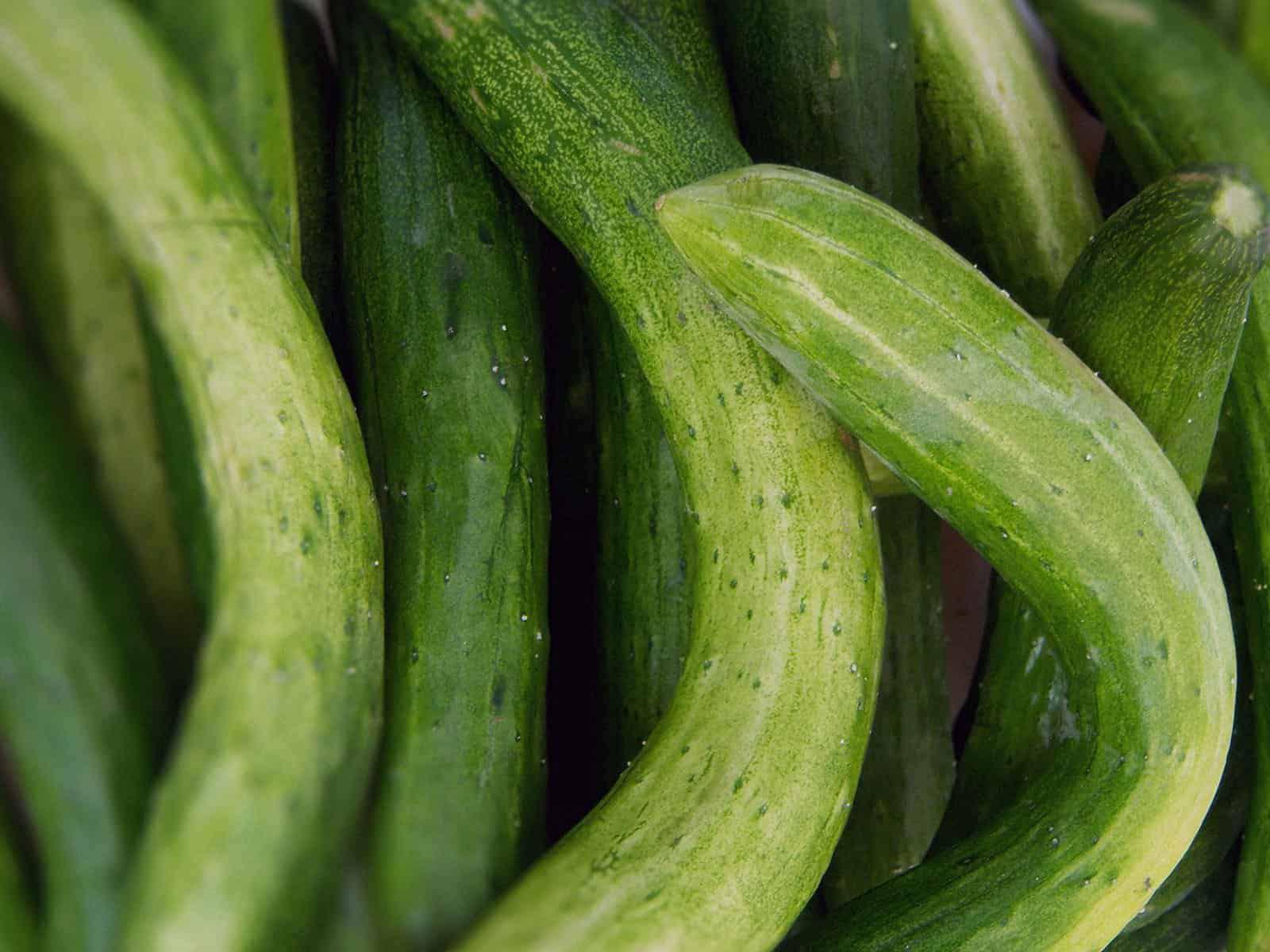
Please never forget: We do our best, but you, as the customer, have the real power to make a difference. Conscious eating should go hand in hand with conscious consumption; it doesn't matter if the cucumber is crooked or straight, or if the apple has a bump, as long as it tastes just as delicious as the models among fruits.
If you'd like to learn more about this topic, we recommend checking out the additional information at Ugly-Fruits . We're also happy to help and advise you via email or in the comments.
Eat fresh,
stay healthy,
know what you consume! Sources (as of July 2, 2014):