Key takeaways:
- Carrots are rich in beta-carotene, which the body converts into vitamin A
- One carrot already covers over 200% of the daily requirement for vitamin A
- Beta-carotene acts as an antioxidant and supports eye, skin, and immune health
- From elegant carrot ribbon salads to creamy carrot-ginger soup – carrots can do more than you think
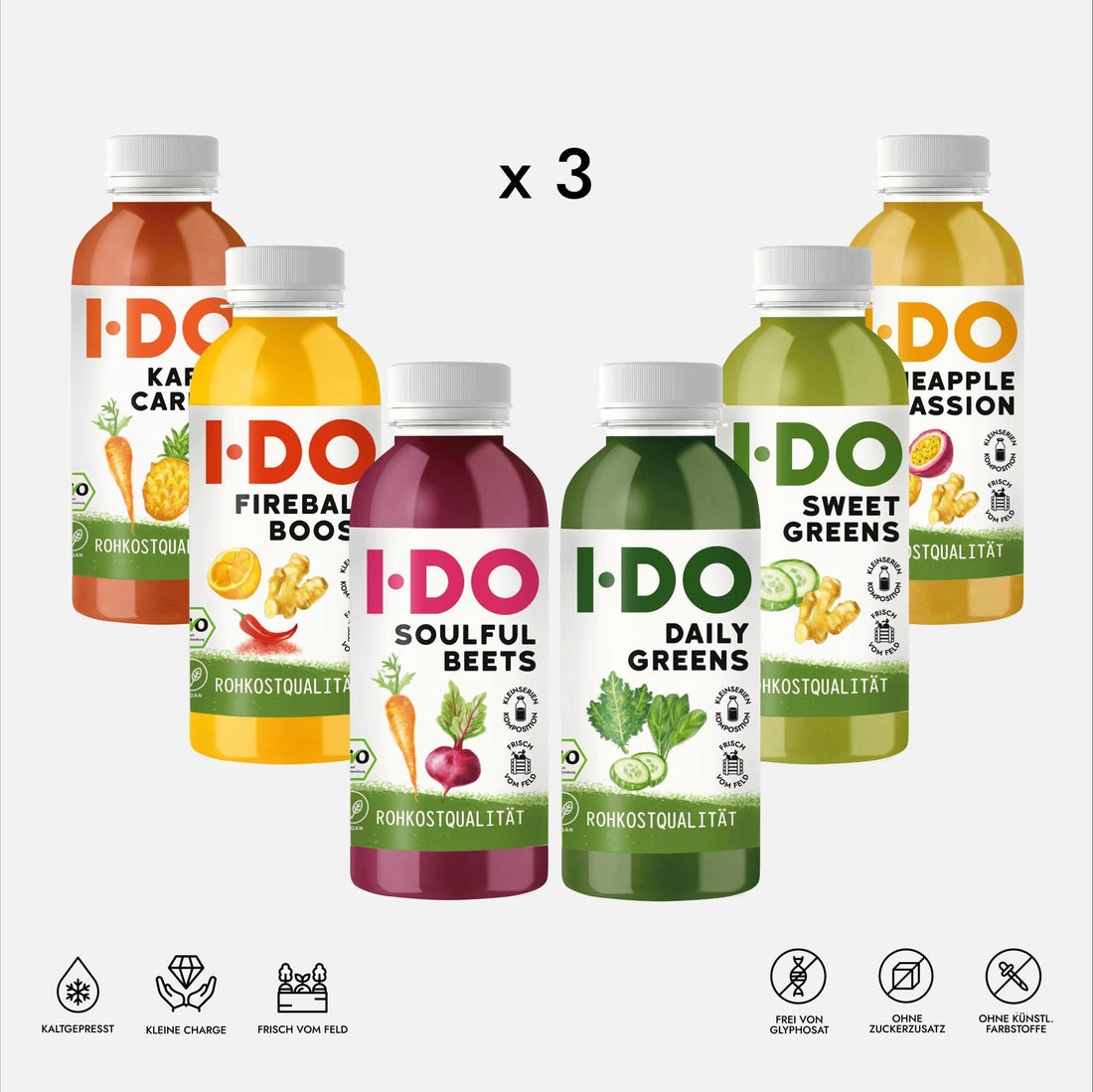
- Karma Carrot Juice combines carrots (35%) with apple, pineapple, and lemon for the quickest option
Carrots are among the most popular vegetables worldwide – and rightly so! This crunchy, orange root vegetable is not only nutrient-rich but also incredibly versatile. Whether as an elegant salad, warming soup, or energizing smoothie: We show you 5 creative ways to integrate carrots into your daily life. All recipes are ready in a maximum of 15 minutes.
Carrot Nutritional Values: Why this orange root vegetable is so healthy

Before we get to the recipes, let's look at what makes carrots a true nutrient champion. This popular root vegetable is packed with valuable ingredients that benefit your body in many ways.
Nutrients that impress
Carrots are true vitamin A bombs. Studies show that beta-carotene from carrots is an important vitamin A source for humans (1):
- Beta-carotene (Provitamin A): One medium-sized carrot provides over 200% of the daily requirement for vitamin A – important for eyesight, immune system, and skin health (1)
- Fiber: Approximately 3g per 100g supports digestion
- Vitamin K1: Important for blood clotting and bone health
- Potassium: Regulates blood pressure and heart function
- Vitamin C: Varies between 21-775 mg/kg depending on the variety (3)
- Antioxidants: Phenolic compounds, carotenoids, and ascorbic acid can protect cells (3)
Beta-carotene in carrots: The orange power
What gives carrots their characteristic orange color – and makes them so valuable – is beta-carotene. This secondary plant compound is a provitamin A carotenoid, meaning your body converts it into vitamin A as needed (1).
Carrots contain four main types of phytochemicals: phenolic compounds, carotenoids (including beta-carotene), polyacetylenes, and ascorbic acid. These have antioxidant, anti-inflammatory effects and can help reduce the risk of certain diseases (3). The carotenoid content in carrots varies greatly depending on the variety: orange carrots are particularly rich in alpha- and beta-carotene (3.2-170 mg/kg), while yellow carrots contain more lutein (3).
Vitamin A is essential for:
- Eyesight: Vitamin A helps the brain interpret light that hits the retina (1)
- Immune system: Vitamin A stimulates the production and activity of white blood cells (1)
- Skin health: Supports cell regeneration and keeps skin and mucous membranes healthy (1)
- Heart health: The phytochemicals contained in carrots can reduce the risk of cardiovascular diseases due to their antioxidant and anti-inflammatory properties (3)
An important note: Beta-carotene is fat-soluble. This means that absorption significantly improves if you eat carrots with some healthy fat – for example, olive oil, nuts, or avocado (1). Carrot juice also has higher bioavailability than raw carrots, as juicing breaks down cell walls (2).
5 quick carrot recipes for every day
1. Carrot Ribbon Salad

Elegant, colorful, and surprisingly refined. Perfect as a starter or light lunch.
Ingredients:
- 3-4 large carrots, peeled
- Handful of fresh herbs (parsley, cilantro, or mint)
- 50g roasted almonds or pistachios, chopped
- 2 tbsp olive oil
- Juice of one lemon or orange
- 1 tsp honey
- Salt, pepper
Preparation: Using a vegetable peeler, shave long, thin carrot ribbons. Place in a bowl. For the dressing, whisk olive oil, lemon juice, honey, salt, and pepper. Pour over the carrot ribbons and mix gently. Sprinkle with herbs and nuts. Serve immediately.
Nutrient bonus: Raw carrots provide all heat-sensitive vitamins. The nuts provide healthy fats that improve beta-carotene absorption.
2. Carrot-Ginger Soup

Warming, creamy, and full of flavor. Ready in 15 minutes.
Ingredients:
- 500g carrots, peeled and diced
- 1 onion, diced
- 1 thumb-sized piece of ginger, peeled and grated
- 500ml vegetable broth
- 100ml coconut milk or cream
- 2 tbsp olive oil
- Salt, pepper, nutmeg
Preparation: Heat olive oil in a pot. Sauté onion and ginger until translucent. Add carrots and sauté briefly. Deglaze with vegetable broth and simmer for 10-12 minutes until carrots are soft. Add coconut milk and blend everything with an immersion blender until smooth. Season with salt, pepper, and nutmeg.
Nutrient bonus: Ginger has anti-inflammatory and digestive properties. Coconut milk provides healthy fats for beta-carotene absorption.
3. Carrot-Apple-Ginger Smoothie

Fruity-sweet with a slight ginger kick, full of energy and brightly orange. Perfect for the morning or after exercise.
Option A (from scratch):
- 2 small carrots, peeled and diced
- 1 apple, cored and diced
- 1 banana
- 1 thumb-sized piece of ginger, peeled
- 200ml water or plant milk
- Ice cubes
- Optional: 1 tbsp nut butter for healthy fats
Preparation: Put all ingredients in a high-speed blender and blend until smooth. Add more liquid if needed.
Option B (ultra-fast with Karma Carrot Juice):

- 120ml Karma Carrot Juice (equivalent to half a bottle)
- 1 banana
- 1 small piece of ginger (or 1/2 tsp ginger powder)
- 100ml water or plant milk
- Ice cubes
- Optional: 1 tbsp nut butter
Preparation: Put all ingredients in a blender and blend. Ready in under 2 minutes!
Nutrient bonus: Apple provides additional fiber and antioxidants, banana potassium and natural sweetness, ginger stimulates metabolism. Nut butter provides healthy fats for better beta-carotene absorption (1).
4. Carrot Cake Energy Balls

Sweet, satisfying, and full of natural energy. Perfect as a snack on the go – no baking required!
Ingredients:
- 100g dates, pitted
- 100g almonds or cashews
- 1 small carrot, finely grated (approx. 50g)
- 2 tbsp rolled oats
- 1 tsp cinnamon
- 1 tsp vanilla extract
- Pinch of salt
- Optional: shredded coconut for rolling
Preparation: Finely chop dates and nuts in a food processor. Add grated carrot, rolled oats, cinnamon, vanilla, and salt. Mix again until a sticky mass forms. Shape into small balls with moistened hands. Optionally roll in shredded coconut. Chill in the refrigerator for at least 30 minutes to firm up.
Nutrient bonus: Dates and nuts provide natural energy, fiber, and healthy fats. Carrots provide moisture and extra beta-carotene.
5. Karma Carrot Juice – The 0-Minute Solution

No peeling, no cutting, no juicing. Just open, drink, done. Sometimes you have neither the time nor the desire to prepare fresh carrots. On such days, Karma Carrot Juice is your savior.
What's in Karma Carrot?
Karma Carrot is an organic raw food juice with carrots (35%) as the main ingredient, combined with apple, pineapple (20.3%), and lemon juice – a fruity-fresh composition that tastes naturally sweet and balanced. The ingredients are 100% organic. The juice is gently cold-pressed and preserved with pressure instead of heat (HPP), which preserves the valuable nutrients.
Our Soulful Beets Juice also contains carrots! With apple, carrot (27%), beetroot (18.5%), lemon juice, and ginger, you get a delicious mixture of root vegetables and spices – perfect if you like variety.
How to best enjoy Karma Carrot:
Pure: A glass (240ml) in the morning gives you an instant beta-carotene boost. Studies show that beta-carotene absorption from carrot juice is 2.09 times higher than from raw carrots (2).
In a smoothie: Use 120ml Karma Carrot as a base for brightly orange smoothies (see recipe above). Saves time and juicer cleaning.
In soups: Add 100-150ml Karma Carrot to soups or curries for natural sweetness and more intense color.
In dressing: 2-3 tbsp Karma Carrot in salad dressing for a sweet and fruity note.
Handling Carrots Correctly: Practical Tips for the Kitchen
Storage of fresh carrots and carrot juice
Fresh carrots keep in the refrigerator for up to 3-4 weeks. Store them best in a perforated plastic bag to reduce moisture. Remove the carrot greens immediately after purchase, as they draw moisture from the root.
Karma Carrot juice is delivered chilled and should also be stored in the refrigerator at home. Unopened, it is best before the printed date; once opened, use within 2-3 days in the refrigerator. Tip: Shake the bottle before opening, as natural components may settle.
Conclusion: Carrots Deserve a Place in Your Kitchen
Carrots are much more than just a snack. They are versatile, nutrient-rich, and can be quickly transformed into delicious dishes. From elegant carrot ribbon salads to warming soups and practical Karma Carrot juice – there is something for every taste and every amount of time. It's worth looking beyond the obvious.
Sources
- Grune T, Lietz G, Palou A, Ross AC, Stahl W, Tang G, Thurnham D, Yin SA, Biesalski HK. β-Carotene Is an Important Vitamin A Source for Humans. The Journal of Nutrition. 2010;140(12):2268S-2285S.
- Choi M, Baek J, Park E. Comparative bioavailability of β-carotene from raw carrots and fresh carrot juice in humans: a crossover study. Nutr Res Pract. 2025;19(2):215-224.
- Ahmad T, Cawood M, Iqbal Q, Ariño A, Batool A, Tariq RMS, Azam M, Akhtar S. Phytochemicals in Daucus carota and Their Health Benefits-Review Article. Foods. 2019;8(9):424.