The most important points in brief:
- The root has been used as a spice and remedy in the Vedic culture of India for almost 4,000 years.
- Marco Polo described the golden spice in 1280 as "a vegetable with all the properties of saffron" and contributed to its spread in Europe.
- The active ingredient curcumin possesses scientifically proven anti-inflammatory and antioxidant properties.
- From India, the root conquered the world: China around 700 AD, East Africa around 800 AD, West Africa around 1200 AD.
When a spice manages to remain relevant for 4,000 years, there must be something special about it. The golden spice – also known as "Indian saffron" – is far more than just a culinary classic. It's a superfood that has survived cultures, continents, and centuries, and is more relevant today than ever.
From sacred rituals to the world stage: The eventful history of turmeric
4,000 years of tradition in Vedic culture

Its origins lie in the Vedic culture of India, where the root served as both a culinary ingredient and a medicinal remedy almost 4,000 years ago (1). Archaeological finds confirm its early importance: residues of turmeric, ginger, and garlic have been found in pots from near New Delhi, dating back to 2500 BCE (2).
Around 500 BC, the golden root became a central component of Ayurvedic medicine. In Sushruta's Ayurvedic Compendium, which dates back to 250 BC, the physician already recommended an ointment made from the root to alleviate the effects of poisoned food (1).
The intense yellow color made the spice not only medically valuable, but also spiritually significant: In Hinduism, it was and still is considered sacred and auspicious.
Marco Polo and the discovery for Europe
When the Venetian explorer Marco Polo encountered the yellow root during his travels through China in 1280, he was fascinated. In his writings, he described "a vegetable that has all the qualities of real saffron – both the smell and the color – and yet it is not really saffron" (1).
This description played a major role in making the spice known in Europe, where it was soon called "Indian saffron" because of its bright yellow color.
The spread occurred gradually: from India, the root reached China around 700 AD, East Africa around 800 AD, West Africa around 1200 AD, and finally Jamaica in the 18th century (1). Arab traders played a crucial role in its spread along trade routes.
The science behind gold: Curcumin and its effects
What makes the golden root a superfood?

The star ingredient is curcumin, a bioactive polyphenol responsible for the characteristic yellow color. Modern scientific research confirms what traditional healing systems have known for millennia: curcumin possesses remarkable health-promoting properties (3).
The three main effects of curcumin are well documented scientifically:
- Anti-inflammatory effect: The active ingredient can influence inflammatory processes in the body at the molecular level. It inhibits certain enzymes and messenger substances that promote inflammation, which is particularly relevant in chronic diseases (3, 4). This very property is what makes ginger-turmeric combinations so valuable.
- Antioxidant power: As a potent antioxidant, curcumin neutralizes free radicals that can cause cell damage. At the same time, it supports the body's own antioxidant defense mechanisms (3).
- Digestive: Traditionally, the root was used for digestive problems. Ayurvedic medicine used it to treat respiratory diseases, liver problems, loss of appetite, and rheumatism (1).
From tradition to modern science
The scientific recognition is impressive: thousands of scientific publications underscore the worldwide research interest in curcumin. Modern science is increasingly confirming what traditional healing systems have known for millennia.
Turmeric today: From curry spice to wellness star
Culinary diversity

In Indian cuisine, the golden root is indispensable. It gives curries their characteristic color and imparts an earthy, slightly bitter taste.
But its use extends far beyond Indian dishes. In Middle Eastern cuisine, the spice seasons rice dishes and pickles, while in Southeast Asia it can be found in noodle soups and stews.
Modern applications range from "golden milk" and smoothies to dietary supplements and functional drinks. Global turmeric production was around 1.1 million tons in 2020, with a forecast of 1.5 million tons by 2027 (5).
Cultural significance preserved
Despite all modernization, the golden root has retained its cultural significance. In Indian wedding ceremonies, paste made from the root is applied to the bride and groom – a ritual called "Haldi" that symbolizes good luck and protection (1).
The yellow color, which once dyed Buddhist monks' robes, can now also be found in sunscreens and face creams.
The root cause lies in your diet: Practical tips
Natural instead of synthetic
The best way to reap the benefits is to incorporate it into your daily diet. Fresh root can be used similarly to ginger: peeled, grated, or sliced. The powder is more convenient for everyday use and, if stored properly, will keep for months.
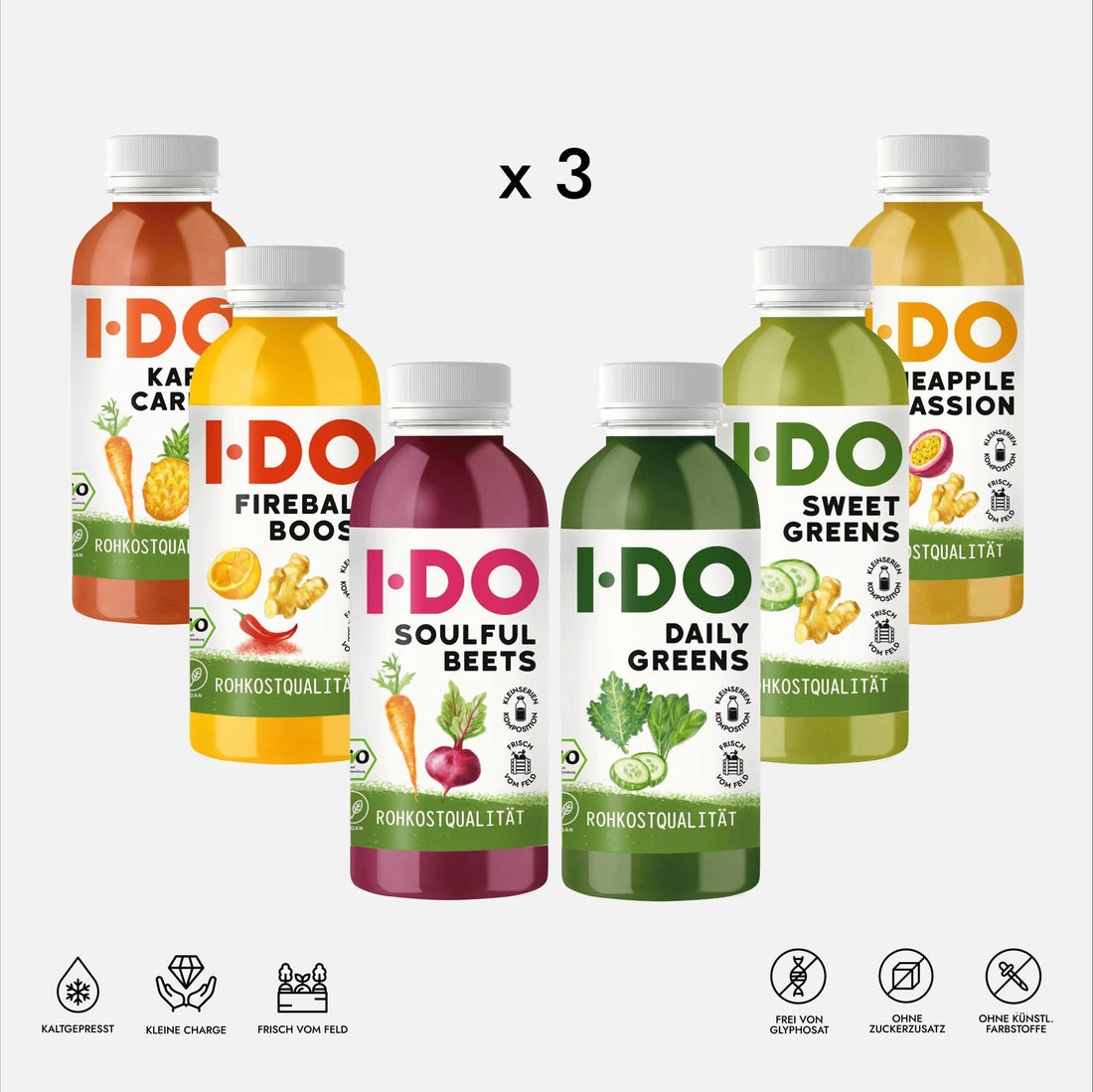
Important note: Curcumin is fat-soluble, meaning that its absorption is significantly improved when combined with some fat (e.g., coconut oil) or spicy seasonings such as black pepper or cayenne pepper. Piperine from black pepper and capsaicin from cayenne pepper can considerably increase the bioavailability of curcumin (3). This is precisely why our Boost & Protect and Pineapple Passion Ginger Shots contain cayenne pepper in addition to turmeric and ginger.

Conclusion: A superfood with an impressive history
The golden root is more than just a trend. It's proof that traditional knowledge and modern science can go hand in hand. From Vedic rituals 4,000 years ago to Marco Polo's awestruck descriptions and on to today's scientific studies – the journey is impressive, and the spice remains as relevant as ever.
The combination of millennia-old tradition, cultural significance, and scientifically proven effects makes this golden spice a true superfood. Whether in curry, golden milk, or as part of a ginger shot – the root has more than earned its place in a health-conscious diet.
Sources
- Prasad S, Aggarwal BB. Turmeric, the Golden Spice: From Traditional Medicine to Modern Medicine. https://www.ncbi.nlm.nih.gov/books/NBK92752/
- What is the History of Turmeric? PBSFood. https://www.pbs.org/food/stories/turmeric-history
- Hewlings SJ, Kalman DS. Curcumin: A Review of Its Effects on Human Health. Foods . 2017; 6(10):92. https://doi.org/10.3390/foods6100092
- Ballester P, Cerdá B, Arcusa R, Marhuenda J, Yamedjeu K, Zafrilla P. Effect of Ginger on Inflammatory Diseases. Molecules . 2022; 27(21):7223. https://doi.org/10.3390/molecules27217223
- Nguyen, L., Govindasamy, R., & Mentreddy, S.R. (2024). Turmeric trends: analyzing consumer preferences and willingness to pay. Frontiers in Sustainable Food Systems , 8, 1359040. https://doi.org/10.3389/fsufs.2024.1359040