Key facts:
- For centuries, fennel was one of Europe's most important vegetables and medicinal plants
- The active ingredient anethole has been investigated for its anti-inflammatory and antimicrobial properties in studies (1)
- Fennel can help with functional digestive complaints (2, 3)
- Fennel provides vitamin C, potassium, calcium, and fiber with few calories
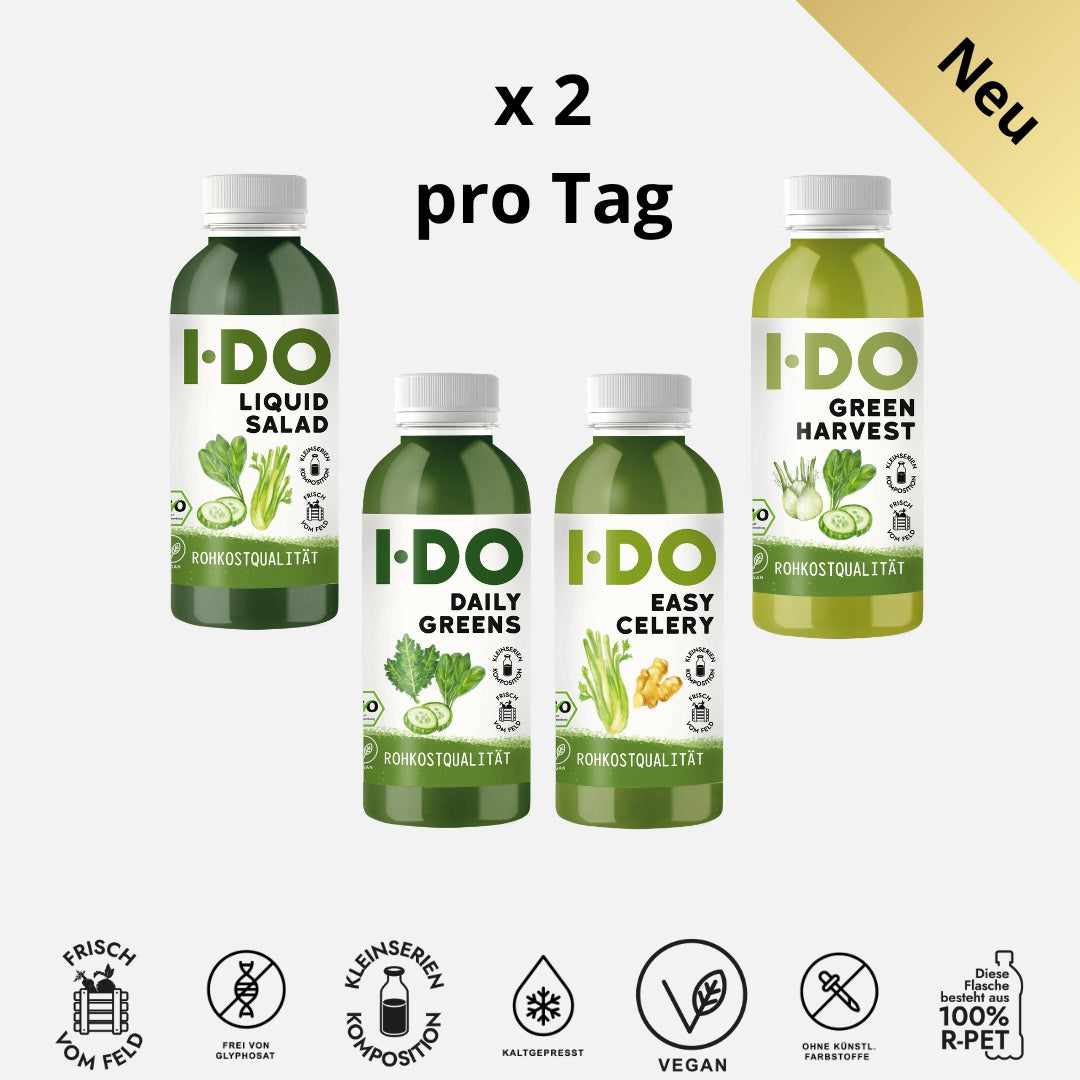
- I·DO's Green Harvest contains fennel along with cucumber, spinach, parsley, basil, and lemon
How a traditional vegetable disappeared from German kitchens
There are plants that were on our plates for millennia and then disappeared almost overnight. Fennel is one such case. Hildegard von Bingen recommended it for stomach complaints, Greek doctors used it for digestion, and it was a staple in 19th-century German kitchens. Today, it mostly ends up as fennel tea on supermarket shelves, and even there, most people only reach for it when they have a stomach ache.
However, it would be a mistake to reduce fennel to its tea-like effects. Why we have pushed it out of our daily lives can hardly be explained by a single reason. It was probably a combination of changing tastes, imported alternatives, and a trend away from seasonal cooking. The result is the same: an extraordinary vegetable is overlooked.

Fennel and its health properties: What research knows
The characteristic aroma of fennel comes from the essential oil anethole, which is found in all parts of the plant. Anethole is pharmacologically active. Studies have observed anti-inflammatory and antimicrobial properties (1). Whether these effects are relevant in everyday life is still subject to further research. However, the results so far are remarkable for a vegetable that is hardly ever on plates in Germany.
The effect of fennel on digestion is best documented. Studies show that fennel preparations can help with functional gastrointestinal complaints (2). A randomized, placebo-controlled study in infants observed a significant reduction in colic with fennel seed oil emulsions (3). The exact mechanism is not yet fully understood; relaxing effects on the smooth muscles of the intestine are discussed.
Nutrients and ingredients: What fennel really provides
Fennel is low in calories and nutrient-dense. 100 grams of raw fennel bulb provide (4):
- 12 mg Vitamin C
- up to 414 mg Potassium
- 49 mg Calcium
- 0.7 mg Iron
- 3.1 g Fiber
The German Nutrition Society recommends consuming as many different types of vegetables as possible daily, and fennel is one of the most frequently overlooked. Low in calories, rich in minerals, and with the active ingredient anethole, which has received attention in research for decades, would be a good reason to change that.
Preparing fennel: 5 easy ways

Anyone who wants to integrate fennel into their daily routine faces a practical problem. Most people don't have a routine for preparing it. Yet, fennel is more versatile than its reputation suggests:
- Raw in salad – thinly sliced with olive oil and lemon, crunchy and aromatic
- Roasted in the oven – at 200 degrees, the bulb becomes soft and slightly caramelized, the anise flavor milder
- As a soup – pureed with potato or carrot, creamy and mild
- Steamed as a side dish – in butter with a little white wine, goes well with fish
- As a raw fennel juice – cold-pressed, the aroma is preserved, and fennel can be enjoyed daily without cooking
Fennel in organic raw food juices: Green Harvest by I·DO

For those who want to incorporate fennel into their daily lives in this way, I·DO's Green Harvest is a juice that does just that. Green Harvest contains fennel along with cucumber, spinach, parsley, basil, and lemon – 100% organic, no fruit, no added sugar, cold-pressed, and never heated. No chopping, no cooking, no fuss.
Discover Green Harvest and other I·DO organic raw food juices now.