Key facts at a glance:
- Beetroot is rich in folic acid, fiber, manganese, potassium, and vitamin C
- The root contains nitrates, which the body converts into nitric oxide
- Betalains give it its intense color and have antioxidant effects
- From pink hummus to elegant carpaccio – beetroot can do more than you think
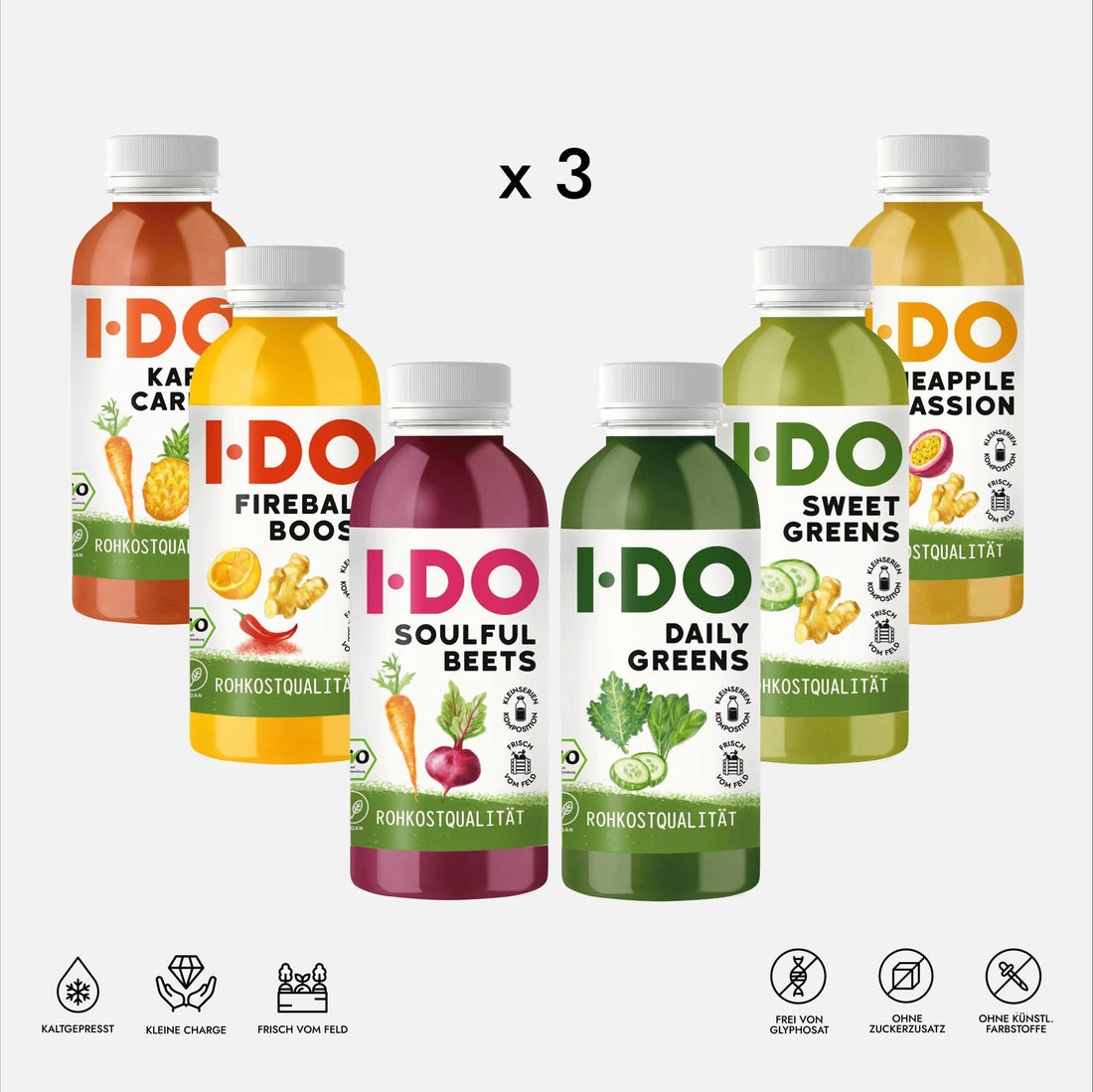
- Soulful Beets juice combines beetroot with apple, carrot, lemon, and ginger for the quickest option
Beetroot often leads a shadowy existence – unfairly so! This ruby-red root is not only nutrient-rich but also surprisingly versatile. Whether as a creamy dip, a crunchy salad, or a refreshing smoothie: We'll show you 5 easy ways to incorporate beetroot into your daily life. All recipes are ready in a maximum of 15 minutes.
Beetroot nutritional values: Why this ruby-red root is so healthy
Before we get to the recipes, let's look at what makes beetroot a true superfood. This unassuming root is packed with valuable nutrients that can benefit your body in various ways.

Impressive nutrients
Beetroot is a true nutrient powerhouse (1, 2):
- Folic acid (Vitamin B9): 100g of beetroot provides over 30% of the daily requirement, important for cell growth and division
- Fiber: 2-3g per 100g supports digestion
- Manganese: Over 15% of the daily requirement per 100g
- Potassium: Over 15% of the daily requirement, important for blood pressure and heart function
- Vitamin C: Supports the immune system
- Iron: Important for oxygen transport in the blood
Nitrates and betalains in beetroot: The special effects
What sets beetroot apart from other vegetables are two special ingredients that are rarely found in this combination.
Nitrates: Beetroot contains natural nitrates, which the body converts into nitric oxide (NO). This process begins in the mouth through bacteria in the saliva (3). Nitric oxide helps blood vessels relax and widen, which improves blood circulation (3).
Betalains: These pigments give beetroot its intense color. Especially betanin – the main betalain – has an antioxidant effect (2). Beetroot is one of the few vegetables that contain betalains. Betalains are heat-sensitive. When steaming, keep it under 15 minutes, and when roasting, under one hour, to preserve the nutrients (2).
5 quick beetroot recipes for every day
1. Pink Hummus (Vegan Recipes)

Why you'll love it: Instagram-worthy pink, creamy, and perfect as a dip for vegetable sticks or on bread.
Ingredients:
- 1 small cooked beetroot (approx. 100g)
- 1 can chickpeas (240g), drained
- 2 tbsp tahini
- Juice of half a lemon
- 1 clove garlic
- 2-3 tbsp olive oil
- Salt, cumin
Preparation: Put all ingredients in a blender and blend until smooth. Add a little water if needed for the desired consistency. Drizzle with olive oil and serve.
Nutrient bonus: Chickpeas provide protein and fiber, tahini healthy fats and calcium.
2. Beetroot Carpaccio

Why you'll love it: Elegant, quick, and surprisingly refined. Perfect as a starter or light lunch.
Ingredients:
- 2 raw beetroots, peeled
- 50g goat cheese or feta
- Handful of walnuts
- Fresh herbs (dill, parsley, or basil)
- 2 tbsp olive oil
- Juice of half a lemon or orange
- Salt, pepper
Preparation: Slice beetroot thinly with a peeler or mandoline. Arrange on a plate. Sprinkle with goat cheese, chopped walnuts, and herbs. Drizzle with olive oil and lemon juice. Season and serve immediately.
Nutrient bonus: All vitamins and enzymes are preserved when raw. Walnuts provide omega-3 fatty acids.
3. Beetroot & Goat Cheese Salad

Why you'll love it: Perfect balance of earthy-sweet (beetroot), creamy-tangy (goat cheese), and crunchy (walnuts).
Ingredients:
- 2-3 cooked beetroots, diced (or use pre-cooked from a vacuum pack)
- 100g mixed greens
- 50g goat cheese, crumbled
- Handful of walnuts, roughly chopped
- 2 tbsp balsamic vinegar
- 3 tbsp olive oil
- 1 tsp honey or maple syrup
- Salt, pepper
Preparation: Wash mixed greens and place in a bowl. Add diced beetroot. For the dressing, whisk together balsamic vinegar, olive oil, honey, salt, and pepper. Pour over the salad. Top with goat cheese and walnuts.
Nutrient bonus: Leafy greens provide vitamin K, goat cheese protein, and calcium.
4. Beetroot & Berry Smoothie

Why you'll love it: Bright pink, sweet-earthy, and perfect for morning or after sports.
Option A (with fresh beetroot):
- 1 small raw beetroot, peeled and diced
- 1 cup frozen mixed berries
- 1 banana
- 200ml plant-based milk (oat, almond, coconut)
- 1 tsp chia seeds
- 1 tsp honey or dates (optional)
Option B (ultra-fast with Soulful Beets):
- 100ml Soulful Beets juice
- 1 cup frozen berries
- 1 banana
- 100ml plant-based milk
Preparation: Place all ingredients in a high-speed blender and blend until smooth. Add more liquid if needed.
Nutrient bonus: Berries provide antioxidants, banana potassium, chia seeds omega-3 and fiber.
5. Soulful Beets Juice – The 0-minute solution

Why you'll love it: No peeling, no chopping, no cooking. Simply open, drink, done. Sometimes you have neither the time nor the desire to cook. On such days, Soulful Beets juice is your salvation.
What makes Soulful Beets special?
Beetroot juice doesn't have to be boring! Soulful Beets combines two root vegetables with apple, lemon, and ginger – a balanced composition of 46% vegetables and 54% fruit juice. The ingredients are 100% organic and fresh from the field: apple, carrot (27%), beetroot (18.5%), lemon juice, and ginger. This makes the juice particularly versatile: You can drink it pure, mix it into smoothies, stir it into salad dressing, or even use it in soups. It's especially practical as an afternoon snack, after sports, or as part of your juice cleanse.
How to best enjoy Soulful Beets Juice
When drunk pure, Soulful Beets tastes particularly balanced due to the combination of fruity sweetness (apple, carrot) and earthy beetroot. The lemon and ginger add a fresh note. If the taste is too intense for you, you can dilute the juice with water, apple, or orange juice. In smoothies, it serves as the perfect base for vibrant pink creations, and 2-3 tablespoons in salad dressing provide an intense color. This way, you get beetroot in a ready-to-drink form, without any peeling, chopping, or cooking.
Handling beetroot correctly: Practical tips for the kitchen
How to avoid stains on hands and cutting boards
Beetroot stains intensely – this is both a curse and a blessing. The beautiful color can unfortunately also stain your hands and kitchen utensils. It's best to wear rubber gloves when peeling and cutting. If you do work without gloves, wash your hands immediately after cutting with soap. For stubborn stains, rubbing your hands with lemon juice helps – the acid dissolves the pigments. Also, use metal boards instead of wooden boards, as wood will stain permanently.
Storage of fresh and cooked beetroot
Fresh beetroot can be stored in the refrigerator for up to 2 weeks. Remove the leaves immediately after purchase, as they draw moisture from the root and cause it to wilt faster. Cooked beetroot should be stored in an airtight container in the refrigerator, where it will stay fresh for 3-5 days. Soulful Beets Organic Juice is delivered chilled and should also be stored in the refrigerator at home. Unopened, it is best before the printed date; once opened, you should keep it refrigerated and consume it within 2-3 days.
Raw vs. Cooked
Raw: More vitamin C and enzymes are preserved. Crispier, earthier taste. Perfect for salads, carpaccio, smoothies, and juices.
Cooked: Sweeter, softer taste. Betalains remain more stable if not cooked too long. Perfect for hummus, soups, and roasted vegetables.
Conclusion: Beetroot deserves a place in your kitchen
Beetroot is much more than just a pickled side dish from a jar. It's versatile, nutrient-rich, and can be quickly transformed into delicious dishes. From pink hummus to elegant carpaccio to practical Soulful Beets juice – there's something for every taste and every amount of time. Give this ruby-red root a chance. Your taste buds (and your body) will thank you!
Sources
- Clifford T, Howatson G, West DJ, Stevenson EJ. The Potential Benefits of Red Beetroot Supplementation in Health and Disease. Nutrients. 2015;7(4):2801-2822.
- Bahadoran Z, Mirmiran P, Kabir A, Azizi F, Ghasemi A. The Nitrate-Independent Blood Pressure-Lowering Effect of Beetroot Juice: A Systematic Review and Meta-Analysis. Advances in Nutrition. 2017;8(6):830-838.
- Webb AJ, Patel N, Loukogeorgakis S, et al. Acute blood pressure lowering, vasoprotective, and antiplatelet properties of dietary nitrate via bioconversion to nitrite. Hypertension. 2008;51(3):784-790. https://doi.org/10.1161/HYPERTENSIONAHA.107.103523