Key facts:
- Spinach originated in ancient Persia and came to Europe via Arab trade routes in the Middle Ages.
- Arab scholars called spinach "the leader of leafy greens".
- The story of the comma error in iron content is itself a myth: the real error was poor measurement methods in the 19th century.
- Spinach provides vitamins A, K, C, B9, magnesium, potassium and bioactive plant compounds with antioxidant and anti-inflammatory effects.
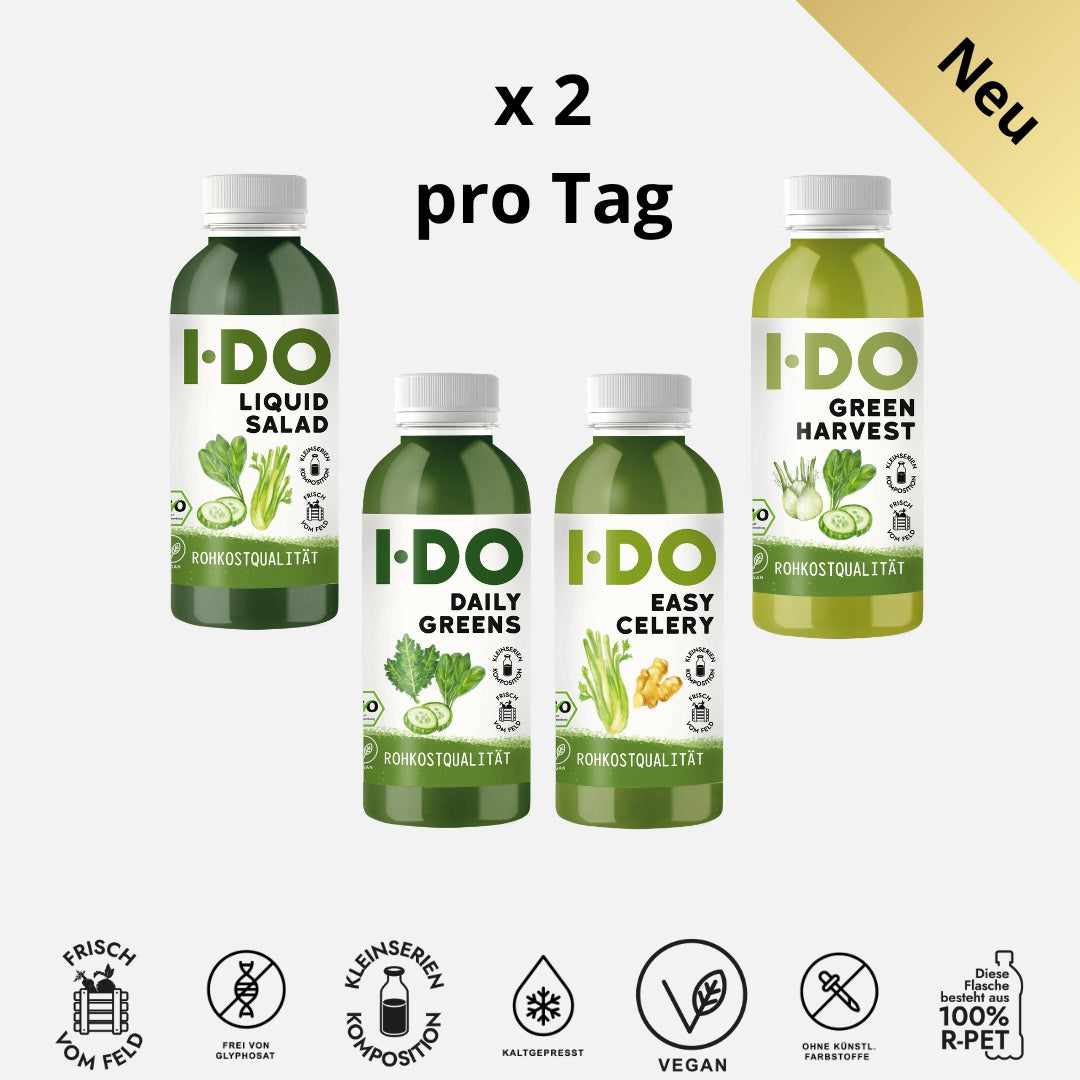
- I·DO organic raw food juices such as Daily Greens, Liquid Salad and Green Harvest combine spinach with other vegetables, making it easy to bring more plant-based variety into everyday life.

A journey that began 2000 years ago
Imagine: Persia, about 2000 years ago. While European cities were still in their infancy, Persian gardeners were already cultivating a green leafy vegetable that would conquer the world. Spinach – or as the Persians called it: "ispanakh". The climate was perfect, the soil fertile, and spinach grew quickly and robustly.
From there, spinach began its world tour. In 647 AD, it reached China via Nepal. The Chinese aptly called it "Persian vegetable" – a name that honored its exotic origin. Later, in the 10th century, Arab physicians and agricultural scientists mentioned spinach in medical and agricultural writings. Then, in the 12th century, came the great moment: the Arab agronomist Ibn al-'Awwām gave spinach the honorary title "raʼīs al-buqūl" – leader of leafy greens.
Why this pompous title? Spinach was nutritious, versatile, easy to grow, and grew in early spring when hardly any other fresh vegetables were available. The Moors brought spinach to Europe via the Iberian Peninsula, and by the 13th century it had already arrived in Germany, England, and France. European monasteries cultivated it diligently. Spinach was the perfect fasting vegetable: filling, nutritious, and allowed during meatless days.

The Florentine Connection: Catherine de' Medici
This is where it gets royal: In 1533, Catherine de' Medici became Queen of France. Legend has it that she loved spinach so much that she had it served with every meal. Is that true? Historians are skeptical. But one thing is certain: to this day, dishes with spinach are referred to as "à la Florentine" (Florentine style) – named after Catherine's birthplace, Florence. Eggs Florentine, fish on a bed of spinach – all homages to the spinach-loving queen.

The Biggest Scientific Plot Twist: The Iron Myth
Now it gets really ironic. For decades, textbooks, scientists, and even nutritionists told the following story: In the 19th century, a German scientist made a comma error, thereby overestimating the iron content of spinach tenfold. This error mistakenly declared spinach an iron bomb and was the reason Popeye ate spinach.
Plot twist: This story is itself a myth!
British criminologist Ole Bjørn Rekdal investigated the origins of this story in 2014 and found out: there was never a comma error (1). A review of old German biochemistry journals showed that the exaggerated iron values from the 19th century were due to poor measurement methods: scientists accidentally contaminated samples with the vessels they used, or compared fresh spinach with dried spinach (which has a much higher mineral concentration).
The story of the comma error was only popularized in 1972 by nutritionist Arnold Bender and further spread in 1981 by hematologist Terence Hamblin in the British Medical Journal – ironically as a warning about the importance of checking facts, without having checked the facts himself (1). A myth about myths – meta-mythology at its finest!
Popeye and the true story

And now for the ultimate irony: Popeye never ate spinach for its iron content.
When Elzie Crisler Segar created the comic character Popeye in 1929 and first had him eat spinach in 1931, it was about something completely different. In a comic strip from July 3, 1932, Popeye explicitly states: "Spinach is full of Vitamin A, an' tha's what makes hoomans strong an' helty!"
Segar chose spinach because of its vitamin A content – which was already known at the time for its importance for eyesight and the immune system. And the strategy worked: spinach consumption in the US increased by 33% in the 1930s. The city of Crystal City, Texas, self-proclaimed "Spinach Capital of the World," even erected a statue in honor of Popeye in 1937 – the first public statue ever dedicated to a comic character.
The True Nutritional Power: What Spinach Can Really Do
Even if spinach is not the iron bomb it was thought to be, it is still a true nutritional wonder. Studies show impressive values (2, 3, 4):
- Vitamins: Spinach is extremely rich in vitamin K (important for blood clotting and bone health), vitamin A in the form of beta-carotene (supports eyesight, immune system, and skin), folic acid/vitamin B9 (essential for cell growth and pregnancy), and vitamin C (antioxidant and immune booster) (2, 3, 4).
- Minerals: Magnesium supports muscle and nerve function, potassium regulates blood pressure, and calcium contributes to bone health (2, 3).
- Phytonutrients: Spinach contains flavonoids, carotenoids (like lutein and zeaxanthin for eye health), phenolic compounds, and chlorophyll – all with antioxidant and anti-inflammatory properties (3, 4). These plant compounds help to scavenge free radicals, prevent cell damage, and reduce inflammation in the body (3).
- Current research shows that the bioactive plant compounds in spinach can modulate gene expression in areas such as metabolism, inflammation, and antioxidant defense (3). These biological activities contribute to the protective properties of spinach (3).
Organic Vegetable Juices: Spinach in a modern guise

Today, you no longer have to grow, wash, cut, or cook spinach yourself to incorporate it regularly into your daily life. I·DO organic raw food juices combine spinach with other vegetables, fruits, and superfoods, making plant-based variety particularly accessible!
- Daily Greens: With apple, cucumber, spinach, kale, and lemon juice – a fresh combination of spinach with other green vegetables, fruit, and citrus notes.
- Liquid Salad: With cucumber, apple, spinach, celery, lemon, and spirulina. Like a salad to drink, but without chewing. Ideal if you're on the go and don't want to miss out on your portion of vegetables.
- Green Harvest: With fennel, cucumber, spinach, lemon juice, parsley, and basil – a Mediterranean vegetable composition with slightly sweet fennel and spicy herbs.
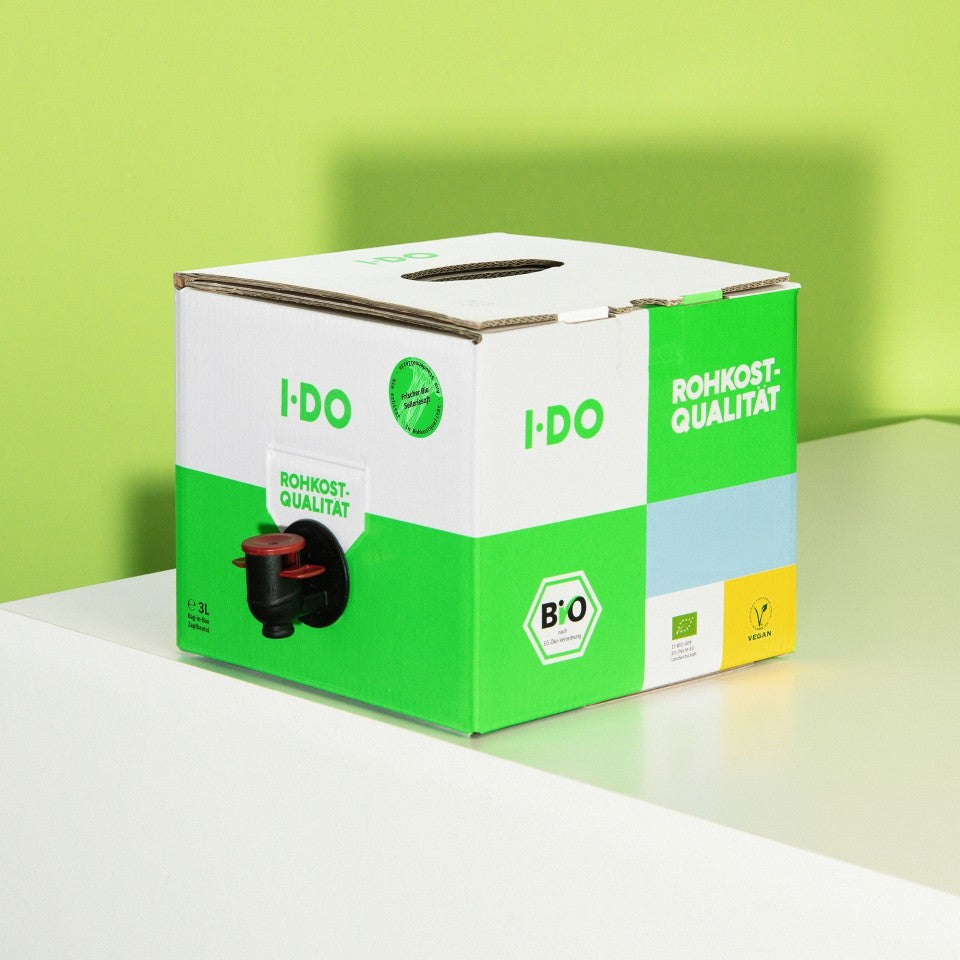
These juices are 100% organic, cold-pressed, and preserved by high-pressure processing (HPP) without heating. An easy way to incorporate spinach with other plant-based ingredients into your daily routine without much preparation.
Conclusion: A vegetable with history and irony
Spinach has had an impressive journey: from Persian gardens via Arab trade routes to medieval Europe, from monastery gardens to royal tables, from scientific myths to comic heroes. The biggest lesson? Sometimes the stories about food are just as fascinating as their nutrients.
Spinach is not a magic power food that grants instant superpowers. But it is a nutrient-rich vegetable with a fascinating history full of irony: a myth about a myth, a comic character who ate the right thing for the right reasons, and a "leader of leafy greens" who still deserves this title today.
Whether fresh in a salad, steamed as a side dish, in a smoothie, or as an organic vegetable juice – spinach has earned its place in our diet. Not because of a comma error, but because of real nutritional power. And that's the most beautiful story of all.
Sources
- Rekdal OB. Academic urban legends. Social Studies of Science. 2014;44(4):638-654. https://doi.org/10.1177/0306312714535679
- Ibrahim IM, Oluchukwu NV, Salisu A, Nkemakonam OM. Nutritional and Phytochemical Analysis of Spinach Leaf Aqueous Extract: A Comprehensive Study on Proximate Composition, Minerals, Vitamins, and Antioxidant Activity. Eurasian Journal of Science and Technology. 2025;5(3):302-311.
- Roberts JL, Moreau R. Functional properties of spinach (Spinacia oleracea L.) phytochemicals and bioactives. Food & Function. 2016;7(8):3337-3353.
- Balasubramaniam AK, Saste G, Kureshi AA, Mulay V, Hingorani L. Nutritional and health beneficial properties of spinach (Spinacia oleracea L): A comprehensive review. Pharmacological Research - Natural Products. 2025;8:100368. https://doi.org/10.1016/j.prenap.2025.100368