The most important in brief:
- Bloating is caused by several factors: fermentable carbohydrates (FODMAPs), gut microbiome problems, stress, and unfavorable eating habits
- Stress measurably changes the gut microbiome and can lead to dysbiosis, "leaky gut," and inflammation
- When it comes to fiber: increase gradually, otherwise bloating may occur
- Organic juices can have prebiotic effects through polyphenols and oligosaccharides and positively influence the gut microbiome (6)
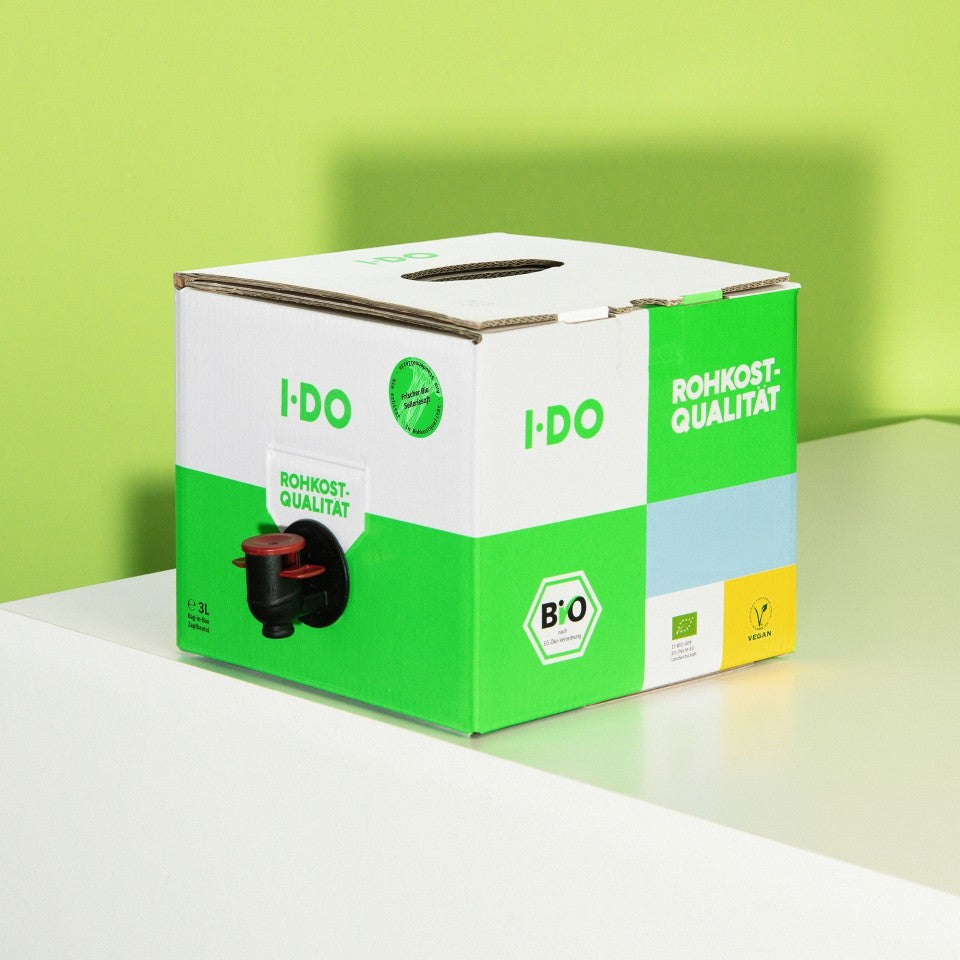
- Organic raw juices and juice cleanses from I·DO help you save time and effort and easily integrate juices into your daily life
- Simple tricks often work wonders: eating slowly, regular meals, drinking plenty of fluids

What causes bloating? The answer is more complex than you think.
Bloating is one of the most common digestive complaints worldwide – millions of people are familiar with the uncomfortable feeling of fullness, distended abdomen, bowel sounds, and pain. Research shows that it's not a single cause, but a combination of several factors (1). The main players: fermentable carbohydrates, the gut microbiome, stress, and lifestyle habits. And the good news? Each of these factors can be influenced.
FODMAPs: When carbohydrates party in the gut

FODMAP – a tongue twister that stands for "Fermentable Oligosaccharides, Disaccharides, Monosaccharides, And Polyols". Sounds complicated, but it's simple: these are carbohydrates that the small intestine cannot properly digest. They end up in the large intestine, where bacteria ferment them, like a mini-brewery in your belly. The result: gas and water in the intestine (1).
Where are FODMAPs hidden?
- Oligosaccharides: wheat, onions, garlic, legumes
- Disaccharides (lactose): milk, yogurt
- Monosaccharides (fructose): apples, honey
- Polyols: stone fruit, sugar substitutes
A study published in 2025 with 184 patients showed impressive results: after a low-FODMAP diet, 69% reported significant improvements. Bloating decreased from 72% to 48%, abdominal pain from 61% to 30% (1, 2).
Important: The low-FODMAP diet is detective work, not a permanent state. After 2-6 weeks of elimination, you can gradually reintroduce FODMAPs. A recent study found that not all FODMAPs are equally problematic. Fructans and GOS most frequently caused symptoms (p = 0.007 and p = 0.04 respectively) (3). On average, patients reacted to only 2 out of 6 FODMAP groups – so you don't have to give up everything!
The Gut Microbiome: The secret power in your belly
Our gut is home to trillions of microorganisms – bacteria, viruses, fungi – that together form the gut microbiome. This invisible ecosystem digests food, strengthens the immune system, and communicates with our brain via the gut-brain axis (4).
A research paper published in 2024 found a clear pattern: people with chronic bloating often had dysbiosis – an imbalance with fewer beneficial bacteria (like bifidobacteria) and more problematic strains (4). Like a garden where weeds take over.
Four ways the microbiome influences bloating (4):
- Gas production: certain bacterial strains produce more gas during fermentation
- Inflammation: dysbiosis increases gut sensitivity – you feel bloating more intensely
- Weak gut barrier: disturbed microbiome can lead to "leaky gut"
- Gut-brain communication: bacteria produce neurotransmitters – hence the term "gut feeling"
The good news: the microbiome is malleable! Studies show that diet, probiotics, and lifestyle can positively influence its composition (4, 5).
Stress: The underestimated bloating trigger
"Stress goes to my stomach" – this saying has a solid scientific basis. A study published in 2024 showed that stress directly changes the gut microbiome (5). The body switches into survival mode, which has measurable consequences for the gut:
Four proven stress effects (5):
- Dysbiosis: stressed students demonstrably had fewer health-promoting gut bacteria
- Leaky Gut: even a speech stress test measurably increased intestinal permeability
- Altered bowel movements: stress can cause constipation or diarrhea
- More inflammation: chronic stress increases inflammatory markers in the gut
Further nutritional and lifestyle strategies
In addition to targeted FODMAP and stress reduction, there are practical everyday strategies:
1. Slow, conscious eating
Eating quickly means: you swallow air and don't chew enough. Specifically: chew each bite 20-30 times, put down cutlery between bites, turn off your phone.
2. Regular meals
Regular meals at the same time of day support intestinal motility. Very late eating (after 8 PM) burdens digestion.
3. Drink enough
Recommendation: At least 1.5-2 liters of water or unsweetened beverages per day.

Organic juices as a tasty source of fluids: A study published in 2017 investigated how fruit and vegetable juices affect the gut microbiome (6). Researchers found that vegetable and fruit juices contain polyphenols and oligosaccharides, which can have a prebiotic effect. They serve as "food" for beneficial gut bacteria. The gut microbiome can change positively (fewer pro-inflammatory Firmicutes and Proteobacteria, more health-promoting Bacteroidetes), nitric oxide (an important vasodilator) can increase, and oxidative stress can significantly decrease (6). However, it is important to note: juices work best as a supplement to fiber-rich whole foods, not as a substitute!
If you're curious how to integrate juices into your daily life without much effort, shopping, or daily pressing: On our website, you'll find organic raw juices and juice cleanses that are made without heating and can be enjoyed easily.
4. Gradually increase fiber
A sudden increase in fiber can exacerbate bloating. The rule: increase intake by only 2-3 grams every few days over several weeks.
5. Exercise after eating
Even a 10-15 minute walk stimulates intestinal motility and helps reduce gas accumulation.
The individual approach: Your body, your rules
There is no miracle pill. What works for your friend may be ineffective for you.
Keep a symptom diary:
- Note meals, times, portion sizes
- Rate symptoms (1-10)
- Record stress levels, sleep, exercise
After two weeks, you usually see clear connections.
When does it get serious? See a doctor if:
- Weight loss, fever, or blood in stool
- Suddenly appearing, worsening symptoms
- Persistent severe abdominal pain
Conclusion: Small steps, big impact
Bloating is complex, but solvable. From fermentable carbohydrates to the gut microbiome, stress, and lifestyle habits, many factors play a role. But that's exactly the good news: you have more control than you think.
Through targeted dietary adjustments, stress management, and simple lifestyle changes, most people can significantly reduce their symptoms. Studies show: it works for 69% (1, 2).
Start small: Eat slower. Drink more. Move. Reduce stress. Keep a symptom diary. Every person is different – you'll find out what helps you through patient experimentation. Your gut will thank you.
Sources
- Kuźmin L, Kubiak K, Lange E. Efficacy of a Low-FODMAP Diet on the Severity of Gastrointestinal Symptoms and Quality of Life in the Treatment of Gastrointestinal Disorders—A Systematic Review of Randomized Controlled Trials. Nutrients. 2025;17(12):2045.
- Foulkes R, Dami L, Shah P, Twomey A, Jones D, Lomer M. A service evaluation of FODMAP restriction, FODMAP reintroduction and long-term follow-up in the dietary management of irritable bowel syndrome. J Hum Nutr Diet. 2025;38(1):e13393.
- Eswaran S, Jencks KJ, Singh P, Rifkin S, Han-Markey T, Chey WD. All FODMAPs Aren't Created Equal: Results of a Randomized Reintroduction Trial in Patients With Irritable Bowel Syndrome. Clin Gastroenterol Hepatol. 2025;23(2):351-358.e5.
- Crucillà S, Caldart F, Michelon M, Marasco G, Costantino A. Functional Abdominal Bloating and Gut Microbiota: An Update. Microorganisms. 2024;12(8):1669. https://www.mdpi.com/2076-2607/12/8/1669
- Beurel E. Stress in the microbiome-immune crosstalk. Gut Microbes. 2024;16(1):2327409.
- Henning SM, Yang J, Shao P, et al. Health benefit of vegetable/fruit juice-based diet: Role of microbiome. Sci Rep. 2017;7(1):2167.