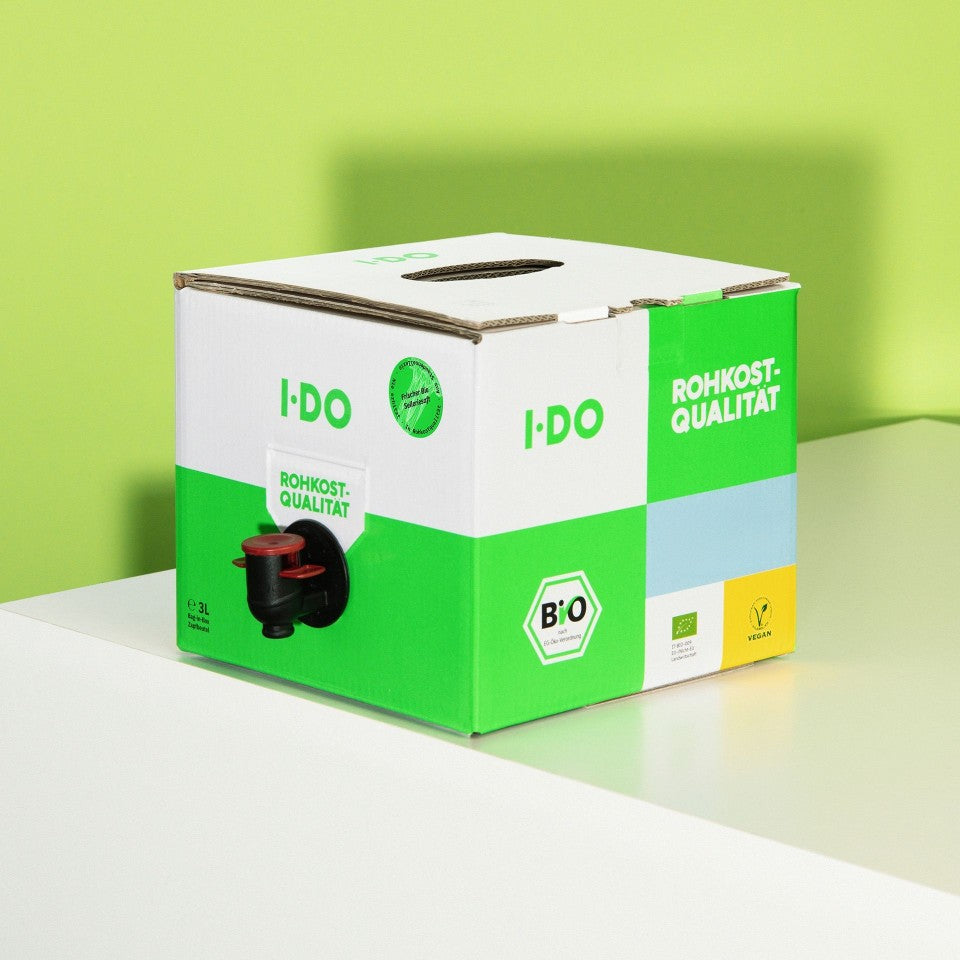
In short: Since March 2024, the German Nutrition Society (DGE) recommends at least 5 portions of fruit and vegetables a day, preferably from the respective harvest season. In Advent, it is easier than you think: kale, red cabbage, Brussels sprouts, lamb's lettuce, carrots, beetroot and apples are now in season. With one portion at each meal and one as a snack, you are already at five. A cold-pressed green vegetable juice is an easy, practical addition to this.
Christmas cookies in the office, mulled wine at the Christmas market, gingerbread on the sofa: the Advent season is wonderful, but fruit and vegetables quickly fall by the wayside. The good news: right now, the selection of domestic winter vegetables is large, and with a few simple habits, you can achieve your "5 a day" even between celebrations and festive meals. Here is your Advent plan.
What the DGE recommends since 2024
In March 2024, the DGE published its new dietary recommendations "Gut essen und trinken". The basic idea: more plant-based foods, fewer animal-based ones, to protect health and the environment. For fruit and vegetables, this means:
- At least 5 portions a day: "Enjoy at least 5 portions of fruit and vegetables per day, preferably in their respective harvest season." (DGE)
- Preferably more vegetables: According to the DGE, fruit has a slightly higher energy density than vegetables. Those who pay attention to their energy intake should therefore prefer vegetables (DGE: Fruit and Vegetables).
- Shop seasonally: According to the DGE, fruit and vegetables from the harvest season are often more affordable and at the same time protect the environment.
- Nuts and legumes: The DGE recommends a small handful of nuts daily and legumes at least once a week. Walnuts and hazelnuts are already on the table in Advent.
What is in season in Advent
According to the Seasonal Calendar of the Federal Centre for Nutrition, there is a large selection of domestic produce in November and December, for example:
- Cabbage in all colors: Kale, Brussels sprouts, red cabbage and white cabbage
- Roots and tubers: Carrots, beetroot and salsify
- For salad and soup: Lamb's lettuce, leek, Chinese cabbage and mushrooms
- Fruit: Apples and pears
Many of these varieties fit perfectly with Christmas dishes: red cabbage with apple, roasted Brussels sprouts, beetroot salad or a kale stew.
Your Advent daily plan for 5 portions
The easiest rule of thumb: one portion at each main meal and one as a snack. This is what a completely normal Advent day can look like:
| Breakfast | Porridge with grated apple or pear, cinnamon and a few walnuts |
| Morning | Carrot sticks or a mandarin instead of the second cookie |
| Lunch | Lamb's lettuce with beetroot or a leek and potato soup |
| Afternoon | a baked apple or apple slices with Advent coffee |
| Evening | Roasted vegetables with Brussels sprouts, carrots and beetroot, with lentils or chickpeas |
5 tips for Christmas parties, markets and festive meals
- Start with vegetables: A salad or vegetable soup as a starter already puts one portion on the plate before roast and dumplings come.
- Half the plate: At the festive meal, take red cabbage, Brussels sprouts and co. first and let the rest wander around it.
- Colorful bowl instead of cookie tin: Place apples, mandarins and nuts where the cookies usually stand. What is within reach will be eaten.
- Pre-cook for busy days: A large pot of vegetable soup or lentil stew lasts for two or three evenings.
- Quench thirst with water and tea: The DGE recommends around 1.5 liters a day, preferably water or unsweetened tea. A warm ginger or herbal tea tastes just as good after the Christmas market. You enjoy mulled wine and punch consciously as an exception.
And where does juice fit in?
The basis remains whole vegetables and fruit: They provide more fiber and satisfy better. The DGE therefore does not count juice as one of the 5 portions, but sees it as a supplement (DGE: Fruit and Vegetables).
However, juice is not all the same. Classic juice is usually made shelf-stable by heating (pasteurization), and heat damages sensitive ingredients. Our juices are cold-pressed and never heated. Instead, they are made shelf-stable by high pressure (HPP, High Pressure Processing). A recent review of fruit juice processing methods concludes that HPP effectively preserves the nutritional value and keeps bioactive plant compounds more stable than pasteurization (Soja & Nowak, Food Science & Nutrition 2026).
This makes a cold-pressed vegetable juice an easy and practical addition, especially on busy Advent days when there is little time for chopping between the office, Christmas party and gift shopping. Our green favorites, both in raw food quality from organic ingredients:
- Daily Greens: Spinach, cucumber and kale, rounded off with apple and lemon
- Liquid Salad: Cucumber, spinach and celery with apple, lemon and spirulina
You can find all varieties in our overview of organic juices in the 240-ml bottle. You can read more about the green leaf that is in both juices in our article Spinach: History, nutrients and organic raw juice.
Good to know
The DGE recommendations are aimed at healthy adults from 18 to 65 years. If you have an illness or need to follow a special diet, talk to your doctor or a nutrition professional. And if things get a bit tight during the holidays: you can find tips on Reducing bloating at Christmas.
Sources: DGE – Gut essen und trinken · DGE – Obst und Gemüse · DGE – Lebensmittelbezogene Ernährungsempfehlungen (2024) · BZfE – Saisonkalender · Soja J., Nowak D., Food Science & Nutrition 2026 · Verbraucherzentrale NRW – Ernährungspyramide. This article does not replace medical advice.
Green through Advent
Cold-pressed, never heated organic vegetable juices in raw food quality – delivered chilled, usually in 2 to 5 business days in Germany.
Discover green juices